Political Discussions: Facebook is Not the Place

Facebook is not the place for political discussions.

I recently posted an article on how weary people are from reading about politics and political discussions.

“Pause Before Posting:  Sharing online stories on is as easy as clicking a share button. However, if the story is about politics, pause before posting. Your friends and connections are probably tired of hearing about it. They get more than a daily dose from major media.”

Politics: A Majority Are Sick of It.

Politics: A Majority Are Sick of It.

Thank you for not giving us your political opinion. ~ www.jaywren.com

The news of politics wears on people. Most Americans are tired of hearing about politics.

Looking for headlines to cover, the media hover over current events for political sound bites. Add to those soundbites the in-depth coverage of speeches and now conventions. Furthermore, candidates are starting to hit the media with advertising campaigns.

Pause Before Posting

Sharing online stories is as easy as clicking a share button. However, if the story is about politics, pause before posting. Your friends and connections are probably tired of hearing about it.

They get more than a daily dose from major media.

If you feel the need to wake people up to your cause, they are probably already tired of hearing about that cause. Apathy in politics is different from political exhaustion. People aren’t indifferent. The media have burned them out on politics.

What is Your Goal?

It is always good to remember to ask ourselves why we are on social media. Is it our goal to make new friends and expand our business network?  Is it our goal to reconnect with friends and business connections?

Or is our goal really to promote a political agenda?

Knowing the goal is important.

When politicians are on the campaign stump, the best politicians say things that draw headlines. The media people pick these things from political speeches and write their headlines. Conservative, liberal, and progressive media use headlines to draw subscribers. Promoting your career with politics is a good idea for people with political careers. It is less of a good idea for people who are not in politics.

Image: Jay Wren

LinkedIn: How to Unfollow a Connection

LinkedIn: How to Unfollow a Connection

It is helpful to know how to unfollow a LinkedIn connection.

Do some of your connections annoy you with the things that they post on LinkedIn?  Does it annoy you that some of you connections post political opinions or that other connections post puzzles or brain teasers.  Do you have connections who spam the news feed with post after another?

Even worse, do you find that people who aren’t your connections are fulling your news feed with their post?

LinkedIn Choices: Accept, Change, or Unfollow

There are at least three things that you can do to end your frustration with the annoying things that some of your connections are doing on LinkedIn.

One thing you can do is to break the connection.  When you break your connection, you lose access to the connections in this person’s network.  You lose their persons’ first-degree connections and on a larger scale, you lose the person’s second-degree connections.  These people no longer show up in your news feed.  They no longer show up in the list of automatic invitation connections among the people “you might know.”

A second thing that you can do is to criticize your connection for annoying you.  In this case, you risk damaging a relationship that might be valuable to you later on.

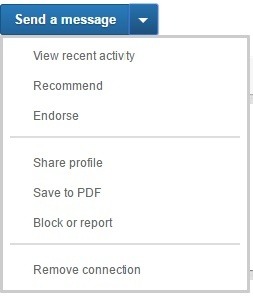
A third option is to unfollow a connection.  The person will still be your connection. The process is simple.  Go to the person’s profile, find the send button, click the down arrow, and click view recent activity.  You will land on the person’s updates.  This is a very cool page.  You can not only follow and unfollow people. You can see how many total contacts they actually have!

LinkedIn Unfollow

Remember your options. Use those options to expand your network and build your relationships.

Images: Jay Wren

Unfollow and Down Vote: Your Internet Power

Unfollow and Down Vote: Your Real Power on the Internet

Unfollow and down vote are consumer power on the Internet.  As a shopper, you have the consumer power of choosing where you spend your money. As an Internet user, you have the same power with your choice of sites that you visit and the posts you see.

You can’t police the Internet.Even worse, complaining only makes things worse.  Whenever you complain about an Internet post, you spread the post like a virus.  You make it viral.

Today I saw a political post on LinkedIn. The post pulls two triggers. I hate this. I like this.

The haters jumped in.  They barked that the post did not belong on LinkedIn. They whined that it was unprofessional.

By complaining, they reposted the original post into the feed of everyone in their connections.

Why Friends Don’t Post Politics on Social Media

Don’t complain.  Unfollow and Down Vote: Your Real Power on the Internet

The better way to punish the people who annoy you on LinkedIn and Facebook is to unfollow them.

On LinkedIn, go to the person’s profile, find the send button, click the down arrow, and click view recent activity.  You will land on the person’s updates.  This is a very cool page.  You can not only follow and unfollow people. You can see how many total contacts they actually have!

LinkedIn Unfollow

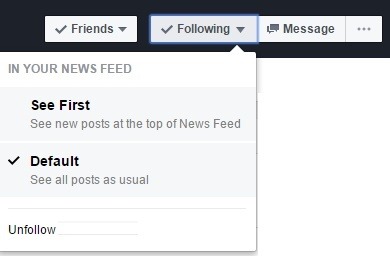
Unfollowing people on Facebook is somewhat simpler.  Just go to their profile and find this button.  You can not only follow and unfollow people and pages.  You can see the priority for your news feed.

Facebook Follow Setting

Images: Jay Wren

Published
Categorized as Success

Attitude Negotiation: Creating Self-Wins

Attitude Negotiation

Changing my attitude creates self-wins. Sometimes I believe that I need to negotiate better conditions at work. A good place to start those negotiations is with that voice between my ears.

When I am in a bad mood, I see the negatives in other people and in my circumstances more easily. When I am in a good mood, I see positives.

Choosing Gratitude

On the other hand, gratitude is a choice. It is a mental tool for negotiating with negative thoughts. It is a mental tool for negotiating for even better thoughts when my mood is good. It is a tool for negotiating with my default mode thinking whether that thinking is good or bad.

The exciting idea of a new job or falling in love, spontaneous expectations of happiness. We don’t just picture the relief and joy of leaving our current situation. We can fall in love with just the idea that a new job will be wonderful. “Oh, please, please, God. Give me that new job and I will never ask for anything again.”

At the same time, we can recognize that falling in love repeatedly can bring us joy. However, it can ruin our lives. As we move from one relationship to another, we sacrifice the support and security of a long-term relationship.

What is the point? Happiness in long-term situations is about making choices and commitments. We make choices and commitments on staying in our jobs.

Practicing Gratitude is One of Those Choices

In addition, we make choices and commitments as to how we feel about our job and our lives.

When our default mode thinking tells us our situation is bad, we can choose how to deal with those thoughts. We can act on them. We can sit there and stew in them. As a third choice, we can focus on the positives of our situation. We can practice gratitude.


Published
Categorized as Success

Successful Telephone Meetings

Successful Telephone Meetings

In a virtual world, the skills for successful telephone meetings are as important as the skills for face-to-face meetings.  Before a telephone meeting, prepare as though you will be sitting in a room with other people.  Your goal is to learn and contribute as much as possible as quickly as possible.  Even if you are uncertain of the value of the meeting, don’t let you lack a preparation make the meeting a waste of your time.

Have these things on your desk:

  • The meeting agenda
  • A list of key points you wish to make
  • A list of questions

Select your phone location carefully.

  • Pick a quiet room.
  • Have a glass of water immediately handy.
  • Pick a comfortable chair.

Even though you are on the phone, let your personality shine.

  • Smile.  You will project warmth even though the interview cannot see you.
  • Speak with confidence and enthusiasm.  To quote career expert Jacquelyn Smith, “Speak with impact.”
  • Remember to take a quiet deep breath from time to time.
  • Say positive things about yourself, your ideas, and the other people in the meeting.

Focus on the meeting.

  • Allow the other people a chance to speak.
  • Ask for input on your ideas.  You can know whether you are gaining acceptance of your ideas.  You can clear up any confusion.
  • Stick to the subject.  Steer the conversation back to the topic when people wander from the purpose of the meeting.
  • Listen to everyone’s questions.  Do not just give a reply to the questions.  Answer the questions that people actually ask.

Do not allow outside interruptions.

  • If you get another call, ignore it.
  • Make sure that people know not to disturb you.
  • Certainly do not multi-task.
  • Do not talk over the other people.
  • Do not try to tell a joke.
  • Do not fake your answers. If you do not know that answer to a random question, just say so.

Remember to close on an upbeat note. 

Thank the other people in the meeting for taking time to speak with you.  Emphasize that you hope to have a chance to speak again.

Published
Categorized as Success

6 Powerful Career Skills You Can Use Right Now

There are many career skills for success.  These six simple skills save time, increase productivity, and reduce stress.

Clean up as you go along.

This is such a simple skill, which makes everything else much simpler.  If I have an empty coffee cup on my desk, I can easily take it with me when I walk to the kitchen.  When I come in at night, I can hang my clothes as I take them off.  There is little effort required to put clothes on a hangar when I already have them in my hand.

Act the first time you think of something.

I can’t always act when I first think of something.  But often I can.  I have found that when I act on the first impulse I can complete many small tasks as I go through the workday.  Just recognizing that acting on that impulse can get me into action helps me get many small tasks out of the way.

Don’t use procrastination lists.

The difference between a procrastination list and a to-do list is the reality of a deadline.  If I am just putting something off, I have a procrastination list.  If I have something to do that has a deadline, I put it on my to-do list.

Break things down into smaller tasks.

I have been editing a book for about a year now.  Much of the work is repetitious.  I am going back over material that I have written and rewritten.  The job is boring.  I have found, however, that I can work on a couple of pages a day and over time have made excellent progress in completing this tedious task of finalizing the book.

Get dressed two hours before it is time to leave.

There is so much stress in watching the clock while I get dressed.  I hate the feeling of panic that I am running late.  There are times when I have other tasks to complete before I get dressed.  But more likely than not, I am just putting off getting dressed until it is nearly time to leave.

Arrive early for airline flights and medical appointments.

When taking flights, I can relax at home before leaving for the airport or I can arrive early and relax at the airport.  Relaxing at home and having the stress of scrambling through flight check-in has become too painful.  I have found that it is helpful to find out what time I need to be at the airport and then add a half hour to that arrival time.  At the doctor’s office, I find that they take me in early when I arrive early.  One of my doctors has a late-arrival fee for patients who come in after the appointment time.  I can avoid that expense and reduce my stress by arriving early.

With a laptop and smartphone, I never waste time no matter where I go.  The question is whether I want to relax before I go or relax before the appointment.

Image: Jay Wren

Published
Categorized as Success

How to Think Clearly

Mind Habits Focus

People do many ways to think clearly.

Here are five of them.

Make lists.  For me, having a list of things to do helps me clear my mind.  Working with my list, I can think of one thing at a time.  I can focus on what I am doing.

Write things out.  When I am worrying about something or angry about something, I can write down what is bothering me.  I can write something as simple as, “I am angry at John, because he took criticized me in front of the other people in the meeting.”

Take responsibility for my actions.  When I make mistakes, I can admit my mistakes.  When I have offended someone, I can clear my mind by saying to that person that I regret what I said or did and that if I had it to do over, I would hopefully handle things differently.  Strangely, when I admit that I am wrong, I stop being angry or resentful.

Take breaks.  For me, a break can take many different forms.  I can step away from my desk and take a short walk.  I can spend time organizing things around my office.  Once a day, I stop for twenty-five minutes to lie down and focus on letting my muscles relax.  I just become aware of which part of my is not relaxed and release the tension.

Reduce distractions. I cannot watch a television program and listen to a person at the same time.  I cannot type on my computer and learn anything from a podcast at the same time.  Whenever I am expecting myself to handle two mental tasks simultaneously, I am not able to think clearly.

How to Negotiate Salary

How you negotiate salary depends on many things.

Here are three of the things that affect how you negotiate salary.

The size of the company:  Larger companies have structured compensation plans.  The plans have pay grades.  The pay grades have three levels: entry range, mid-range, upper range.  Smart hiring managers don’t hire people into the upper range of the pay grade.  If they did, they could not give the person a pay raise without promoting the person.

The level of the job:  For entry-level jobs, companies pay at or slightly above the market minimum, or entry range, for inexperienced people.  Companies pay all inexperienced people closely the same amount.  As a person gains experience, their compensation package becomes more complex and varies more greatly.  Job seekers have greater differences in their compensation based on their time in industry, their performance, and generosity of the hiring company.

The type of compensation plan:  Some companies pay based on performance.  People who perform better receive higher bonuses or commissions.  I have seen medical sales jobs and marketing service sales jobs where the base salary was half what a person had made in base salary at their previous company.  However, the performance compensation was three to four times their compensation at their previous job.

You can do many things to have a successful salary negotiation.

Here are three things to do to win when you negotiate salary.

Know the numbers: It is easy to know the value of a job in the marketplace.  There are pay range calculators online.  The top sites are Salary.com and Payscale.com.  Use these calculators.

Save everyone’s time.  Put compensation on the table before you start.  Ask the recruiter or hiring manager what the salary range is before you go to the interview.  During the first interview, ask the interviewer what the salary range of the job is.  You are not asking what they plan to offer you.  You are just clarifying whether your interviewing for the job is worth their time and yours.

Show the benefits.  Have solid reasons why you need the compensation you expect.  Show how your reasons benefit the needs of the hiring company.  

Related articles.

Good luck with your interviews and negotiations.

10 Ways Winners Beat Stress

10 Ways Winners Beat Stress

There are countless ways to beat stress.  Here are ten things I see winners doing that help me.

Winners own their mistakes.

They correct them.  They move forward.  They don’t let the life’s little mistakes lie around and create problems and stress.

Winners don’t apologize all the time.

People who are apologizing all the time aren’t correcting mistakes.  They are just trying to deal with the stress of insecurities without understanding why they feel insecure.

Winners talk to friends.

Just having friends helps us beat stress.  Talking to friends helps gets us out of my own head and into the present moment.  Talking to friends helps me get my bearings.  Talking to friends can also help me deal with the stress of insecurities that can cause me to apologize all the time.

Winners do it now.

Of course, we feel stressed when we keep putting off what we need to do.  I win when we I do the things I need to do.

Winners write it down.

When something is bothering me, I can write it down.  Writing takes the sting out of stress.  If I have something that I need to do but can’t do now, I can write it down.  Having a list creates a plan of action.  Having the plan helps me become more productive.  When I become more productive, I have a sense of accomplishment.  I feel less stress.

Winners eat healthy stuff first.

We have to eat.  Sometimes our cravings are going to make us eat junk.  Winners don’t worry about it.  But they eat the healthy stuff first.

Winners take breaks!

No one can run wind sprints all day long.  Winners take breaks.  Breaks make us more productive.  People who work in virtual offices can easily forget to take breaks.  I stand up.  I walk away from my desk and walk around for a few minutes.  I lie down for a couple of minutes.  I take breaks by getting away from my work. Not taking breaks creates fatigue, which screws up our perspective and stresses us out.

Winners get plenty of sleep.

Lack of sleep causes depression and anxiety.  Lack of sleep creates stress.  I get plenty of sleep and live with a clear, rested mind.

Winners get real!

It is so easy to believe that we have some kind of control about some national or international event way beyond our control.  Get real.  We can’t police the universe!  Being the cop of the universe is completely fruitless and painfully stressful.

Winners get help!

Asking for help does many great things.  First, you might actually get some help.  Second, by getting in contact with someone else, we get out of own head.  Third, we may even make some friends.  Fourth, we may get a lot more things done!  Fifth, we will have less stress in getting things done.