Profile Cloning: Is Your Identity Being Stolen by a Copycat?

What is Profile Cloning?

Profile cloning is different from profile hacking.  When someone hacks your profile, they gain access to your profile by getting your sign-in information.  This information is usually your password and username or your password and email address.

However, when someone clones your profile, they make a duplicate copy of your profile.  A cloned profile is easy to create.  The person simply downloads you profile picture from your profile.  Then they upload the same picture to the cloned profile.  They use your name.  Therefore, the profile looks the same as your profile.

Why is Cloning a Problem?

When someone hacks your profile, you usually see them posting things that you did not post.

However, when they clone your profile, you may never see what they are posting.  Sometimes, cloners will block you from seeing the cloned profile.  Therefore, you may not know that you profile is cloned.

Then the cloners invite people who trust you to connect with them.  From there, the cloners can phish for information and work various scams.

How do I report a cloned account?

Go to the cloned account.  To the right of the message box you will see three dots.  Click the dots.

In the dropdown menu, select “Report.”  Follow the instructions from there.

But what if the cloner has block me?

If the cloner has blocked you from reaching the cloned profile, have a friend report the clone to Facebook.

How do I know that the cloned profile report reached Facebook?

The person who reported the clone will get this nice card in their Facebook feed: “Thanks for Making Facebook Better.”

They will also get a nice email from Facebook:

“Hi _________,

Thanks for letting us know about someone impersonating your friend on Facebook. Reports like yours are an important part of keeping Facebook a safe and welcoming community.

Since this is happening to your friend, we’re going to close your report and follow up with your friend directly once we’ve reviewed the account.

Thanks again,
The Facebook Team”

The procedures are similar on LinkedIn.

Inspiration: How Successful People Find Joy at Work

Do you find yourself depressed about your work?

Do you have trouble concentrating?

Is it difficult for you to finish your work?

Were you excited when you landed your current job and now you dread doing your job?

During the decades that I worked as a recruiter, I went through easy times, tough times, and times in between. However, there was no other job that I wanted to do.

For me, the swings in business were difficult mentally and emotionally.

There were also some parts of my job that I found boring.  For example, I would receive calls from job seekers I simply could not help.  They were talented people.

However, their experience did not match the experience of people my clients would hire. Sometimes, these job seekers pressed me to hear them out on why I should spend time on their job search.  I would hear phrases like this countless times:  “If you can sell one thing, you can sell anything.”

Explaining that my clients wanted people who could sell anything and who also were experts in the consumer-packaged goods industry, took patience.

At other times, doing what I did was very stressful.  Hiring companies wanted jobs filled right away.  Sometimes job seekers became frustrated and wanted to vent their frustrations.  Deals where I spent a great deal of time would fall apart on one phone call.

Finding Inspiration

At one point, I had been in recruiting for over a decade and American industry was going through a recession.  As a recruiter, I found this period very difficult.  I began to go through a state of depression.

I was sitting in a line in a car wash one day during this period.  It was a beautiful day.  I was driving a new car.  I was in line to have the luxury of having professionals vacuum and wash my car.

And yet, I was really depressed.

I had a Zig Ziglar tape sitting in my car, but I had never taken the time to listen to the tape.  I inserted the tape into my cassette player.  As I listened to the tape, my mood changed.  My depression lifted.  I realized that I had reasons to feel grateful. For starters, I had the privilege of having a new car and the convenience of having other people wash it.   I had a terrific family and a terrific life.  My day brightened.

I realized that the inspiration was in me all along.  I just needed to find ways to awaken it.

Today, I continually look for new ways to find inspiration and I act on these ways.

  • Hang out with inspiring people.
  • Make gratitude lists.
  • Pause to meditate.
  • Act in small steps.
  • Watch, read, and listen to inspiring people.
  • Follow the positive things and avoid the negative.

Today, I know that sometimes, inspiration simply does not simply happen.  However, I can do things that make inspiration happen.

Top 10 Cities & States for Job Growth Rate

Some cities and states offer more than a place to work.  They offer high job growth rate and long-term career security. What are the top states and cities?

Studies from the Arizona State University W. P. Carey School of Business give interesting information that helps us find answers to those questions.

ASU’s Top 10 Cities for Job Growth Rate

ASU’s Top 10 States for Job Growth Rate

Maps based on Arizona State University W. P. Carey School of Business studies.

Business and Career Growth: Can a Business or Career Become Static and Survive?

Business and Career Growth: Can a Business or Career Become Static and Survive?

Building a business or a career is a continual process of expanding your goods, services, skills, and network.  The first day that I sat down to start my career as a recruiter, I had no contacts.  I had a telephone, an empty legal pad, and a box of blank 5 x 8 index cards.

After a decade, my contact management system contained tens of thousands of contacts.  I had personally tracked and created files for these people.  Most of them I have reached out to by phone, email, or professional networks.  I still make new connections every day.  Little has changed except that my file system has gone from paper to a computer.

I continually added clients.

Here is a partial list of companies where I had recruiting contracts:

    1. PepsiCo
    2. Pepsi Bottling Group
    3. Frito-Lay
    4. Coca Cola, USA
    5. Coca Cola Foods
    6. Mobil Oil Company
    7. Soft Soap
    8. Pillsbury Green Giant
    9. International Playtex
    10. Quaker Oats
    11. Dannon Corporation
    12. No Nonsense Fashions
    13. Coca-Cola Foods
    14. Del Monte Foods
    15. The Clorox Company
    16. Nestle
    17. Brach & Brock
    18. Catalina Marketing
    19. Health Resource Corporation
    20. Majers Corporation
    21. Welch Foods
    22. Softsoap
    23. E & J Gallo
    24. Sunny Delight
    25. M & M Mars
    26. Tambrands
    27. Nabisco
    28. News America Marketing
    29. El Dorado Marketing
    30. Imagitas
    31. ConAgra Foods
    32. ConAgra Armour Swift-Eckrich
    33. Polaroid Corporation
    34. Dial Corporation
    35. Dep Corporation
    36. United Vintners
    37. 7-Up
    38. Miller Brewing Company
    39. 13-30 Corporation
    40. Hain Celestial Group
    41. Q-Interactive
    42. Label Dollars
    43. Promo Edge
    44. Centiv
    45. The Sunflower Group
    46. PromoWorks
    47. The Wine Spectrum of Coca Cola
    48. Kaiser-Roth
    49. DSD Communications
    50. Black & Decker
    51. ActMedia
    52. Linkewell Health
    53. Bush Brothers Beans
    54. Marketing Technology Solutions
    55. Sunny D
    56. Twenty-Ten Corporation
    57. InStore Broadcasting Network
    58. Insignia Pops
    59. The Beecham Group
    60. GlaxoSmithKline – GSK
    61. Jacobs Suchard
    62. Cody Kramer
    63. SVP Worldwide
    64. Mauna Loa
    65. Garden Burger
    66. EAS
    67. New World Pasta Company
    68. Vacation Connections
    69. Lala USA
    70. Continental Promotion Group
    71. Kayser Roth
    72. Morningstar Farms
    73. Duracell
    74. Kiss Products
    75. Phillips Food Brokerage
    76. Unicous Marketing
    77. Kelley Clarke Food Brokerage
    78. Wizards of the Coast
    79. Oberto Sausage
    80. Fanfare Media
    81. Linkwell Communications
    82. Lindt
    83. Nurserymen’s Exchange
    84. Maybelline
    85. Advantage 360
    86. American Italian Pasta
    87. Warner Lambert
    88. Fuel Rewards/Centego
    89. First Flavor
    90. Potlatch Corporation
    91. Crossmark Food Brokerage
    92. RB (Reckitt Benckiser)
    93. Marketing Force
    94. J&J Snack Foods Corporation
    95. Cartera Commerce Inc.
    96. Alcon Laboratories
    97. Ray-O-Vac
    98. Naterra
    99. ICOM
    100. Slim Fast (Unilever)
    101. Potlatch Corporation
    102. Dean Foods
    103. …and others

    Companies Come and Companies Go.

    In the list are many companies that no longer exist.  In some cases, the brands still exist.  However, these brands are part of another company.  To stay in business, I had to continue to grow new business.

    Companies come and go.  People come and go.  Processes change.  Opportunities are here today and gone tomorrow.  People who build new relationships and expand their relationships will build security.

    Change is constant in business and careers.  The process of building a business and building a career never ends.

Branding: When the Lowest Price Is Not Enough

Branding: When the Lowest Price Is Not Enough

I worked as a recruiter in the consumer-packaged goods industry. Every day I talked with job seekers and hiring managers who sold consumer products through retail stores.

When I reviewed qualifications, I was assessing a job seeker’s ability to make brands successful. Themes recurred in the profiles I recruited. The hiring companies were seeking people who could design and conduct successful brand campaigns.

Interviewing

When you are interviewing, you might find these ideas helpful to show companies how you can make their brands successful.

Targeted

Walmart, Costco, and Walgreens all sell pharmaceuticals. Walmart targets customers who want to buy sustainable quantities at the best price. Costco, on the other hand, targets customers who can afford to buy larger quantities to get the better price. Walgreens (and CVS) have stores in every neighborhood. They charge higher retail prices for the convenience of shopping locally.

Simple Calls to Action

Calls to action are statements that bring the customer to act. They may be explicit like the statement “Save now.”

Or the call to action may be implicit: “Offer is good while supplies last.”  The statement implies that you must buy now to reap the benefits.

Consistent

Once you know your audience, you hit them with the same message over and over. Advertising is like the Colorado river. Even when navigating through the rapids, you are not likely to see the river eroding the walls and floor of the Grand Canyon. Over time, however, the canyon becomes deeper, wider, and changes course.

Logos and Icons

The use of logos has taken on even more significance as social media has created icons and identity for their brands. Just the following letters alone are enough for people to identify major social media sites:  in, f, G+, P, and t. In order, those iconic letters represent LinkedIn, Facebook, Google+, Pinterest, and Tumblr. Twitter, of course, is the iconic birdie.

Slogans

Slogans are memorable. Here are examples.

“Expect More. Pay Less” (Target Stores) ™

“Ace is the place with the helpful hardware man.” (Ace Hardware™)

“The Most Interesting Man in the World” (XX Dos Equis™)

“Save Money. Live Better.” (Walmart™)

“Glasses in less than an hour.” (LensCrafters™)

My favorite slogan is the iPod launch slogan:  “A thousand tunes in your pocket.” (Apple™)


Jay Wren: The World’s Noblest Headhunter

Jay Wren: The World’s Noblest Headhunter

On the first day that I worked as a corporate recruiter, I sat down at a desk that had a telephone, a stack of 5 X 8 file cards, a legal pad, and a copy of the Directory of Advertisers.

I had no clients.  I had no applicants.  I had a very short list of contacts from my brief career in sales at Procter & Gamble and Polaroid Corporation.

Another recruiter in the office had claimed Polaroid as a client before I arrived at the firm.  Therefore, he had staked out the best potential client I might have.

Over the next 30 years I would recruit for Coca-Cola, Pepsi-Cola, Nestle, Clorox, Del Monte, ConAgra, Mobil Consumer Products, Quaker, Tambrands, Unilever, Reckitt-Benckiser, Maybelline, and many other equal and lesser-sized companies.

Even before the arrival of online networks, I had developed a file-card database of 12,000 contacts.  Today, with LinkedIn, I have the same 200 million contacts as everyone else.

I first published this website April 15, 2005.  I began to publishing a newsletter later that year.  My newsletter helped my business immensely.  Often people would save a copy of these newsletter as a record of my contact information.

Some recruiters hate the term headhunter.

I find the term amusing.  I find it even more amusing to know that some recruiters take offense at the term.  But in the recruiting world, I was a headhunter.  I actively contacted new candidates before they began to look for a job.
I adopted the title of “The World’s Noblest Headhunter.”  The title worked as an icebreaker.   It also helped me to develop a brand.

The Exciting and Painful Beginnings of a Wonderful Career

Starting a new business is exciting and yet often painful and full of uncertainty.  My start as a recruiter was typically painful.  I had beginner’s bad luck before I had beginner’s good luck.  Three after I started to work, another recruiter copied contact information from my files and placed one of the candidates.  The first candidate I placed accepted the job.  Then the candidate quit the first day on the job and returned to his previous company.

It was probably six months before I had a steady stream of business.  This was a scary period.  However, it was a period that led to over three decades of a highly rewarding career.

Published
Categorized as Success

Poise: You can have it, and it’s free. Here’s how.

Poise: You can have it, and it’s free!

Poise: It’s inside you. ~ www.jaywren.com

Some people have a graceful balance.  They exude confidence.  Their presence is dignified and reassuring.  They have a quiet command presence.  They have poise.

Inner Calm

Poise begins with an inner calmness.  This calmness radiates outward.  Here are some things you can do to develop the inner calmness that gives you poise.

Compassion

Not everyone who has poise feels compassion.  But everyone who feels compassion have poise.

People who have compassion are not self-conscious.  They are not thinking about themselves.

On the other hand, self-absorbed people focus on what’s going on inside their head.  They think about how unfairly the world treats them.  These people build anger and intolerance.  They lack the grace and balance of a person with poise.

People with poise release the insecurities that come from thinking about ourselves.  Their insecurities dissipate like clouds.
When we feel compassion, our thinking goes outward to the real world.  We are not thinking about ourselves.  We are we thinking about other people and the world around them.  Additionally, we are thinking about people in kind of and positive way.  We become gracious and our minds create emotional balance.

Compassionate people have a gracious interest in the world where they live.  They have poise.

Breathe

Conscious breathing creates focus in the present moment.  It assists us to do at a higher, more natural level.

Professional athletes in all sports take a deep breath to focus and gain composure.  Watch a basketball player on a free throw line.  They take a deep breath to relax.  Baseball pitchers do the same thing.  Before each pitch, they settle into position, select their pitch, and then they take a deep breath.  Batters also regain focus and clear their mind by taking a deep breath before stepping into the batter’s box.

Watch swimmers on the starter’s stand.  They take a deep breath.  The extra oxygen burns off adrenaline.   Their mind goes from internal insecurity to the water in front of them.

Body Language

Put your shoulders back.  Uncross your arms.  Relax your muscles.  Allow your body to send signals of balance and confidence.   Your body language will help other people feel confident and happy around you.  It will also transform your mental state to a balanced confidence.  You will exude poise.

Published
Categorized as Leadership

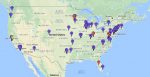
Top 100 Consumer Products Companies

Top 100 Consumer Products Companies, including the name, address, and phone number of America’s largest consumer products companies.

How to Use This Map

Click the icon pin to see the company name, address, and phone number.  When you click the icon, a new tab will open to help you find you find directions to the company office.

Scroll in and out to select new pins.

To expand, click the [  ] icon to open the map in a new tab.

The Consumer-Packaged Goods Industry: Is It for You?

The Consumer-Packaged Goods Industry: Is It for You?

Are you just beginning your career?  Or perhaps, are you considering switching industries?   The Consumer-Packaged goods industry might offer the career you are seeking.

The Consumer-Packaged Goods Industry Defined:

What is the Consumer-Packaged goods industry?

Consumer-Packaged goods companies sell products essential consumers.  These products they make are ones that consumers buy a frequent basis.  Another term for Consumer-Packaged goods is fast-moving consumer goods.  Consumer-Packaged goods companies stand in contrast to the durable goods industry.  Durable goods companies make products like cars, computers, and appliances.

Categories in the Consumer-Packaged Goods Industry

  • Fresh meat
  • Fresh produce
  • Frozen foods
  • Dairy and deli
  • Shelf-stable canned or bottled foods
  • Health and beauty aids
  • Candy
  • Pet Food Products
  • Home products: batteries, matches, clothes pins
  • Household cleaning products
  • Paper products

Some people do not include fresh products as Consumer-Packaged goods companies.  However, people with experience in other categories of Consumer-Packaged goods crossover to fresh food products companies.

Consumer-Packaged Goods Points of Distribution.

  • Grocery stores
  • Convenience stores
  • Mass merchants
  • Deep discount stores or dollar stores
  • Club stores
  • Drug stores
  • Internet

Fastest growing Sector

The fastest growing sector of the Consumer-Packaged goods company is the natural or organic sector.

Jobs in the Consumer-Packaged Goods Industry

  • Category Analysts
  • Marketing, Brand, Product Management
  • Initiative Specialization to include Innovation and Consumer Insight
  • Custom Research
  • Team Leader and Account Managers
  • Distributor and Broker Managers
  • Directors and Executives
  • Business Development
  • Category Management
  • Trade Marketing
  • Sales Analysts
  • Product Managers
  • Sales Planners
  • Logistics Analysts and Managers
  • Market Research and Analytics

Services and Support Companies for the Consumer-Packaged Goods Industry

  • Free-standing Inserts (FSI)
  • Instant-Redeemable Coupons (IRC)
  • Direct Mail Coupons
  • In-store Coupons
  • Data and analytics support
  • Advertising
  • In-Store Marketing Products
  • Product Demonstrations
  • Shelf Signs or Shelf Talkers
  • Floor Signs
  • Shopping Cart Signs
  • In-Store Radio

Categories in Data Support for Consumer-Packaged Goods Companies

The data industry is a growth industry.  You might want to focus on this sector of the Consumer-Packaged goods industry.

  • Category Management
  • Syndicated Data
  • Panel Data
  • Custom Research
  • Shopper Insights Research

List of Consumer Products Packaged Goods Companies

Top 100 Consumer-Packaged Goods Companies

Social Anxiety: Is It Killing Your Career?

It is your responsibility to stop thinking negative thoughts about yourself before they become fixed in your mind as beliefs. Smile. Say something nice about yourself. Make a list of your blessings.

Social Anxiety: Is It Killing Your Career?

“Don’t let the world change your smile.  Let your smile change the world.”  A Work in Progress by Connor Franta

Social anxiety is common.  People who are shy are not the only people who experience social anxiety.  People who are confident about what they say or do around friends and family may feel social anxiety when they are among strangers or in front of an audience.

Social anxiety can make you avoid opportunities for work, fun, and networking.  It can cut your opportunities for leadership roles.  Your anxiety can generate signals that make it harder for people to reach out to you.

Smile

“I’ll take a person with humor much more seriously than someone without one.” Networking is a Contact Sport by Joe Sweeney

There are many things that you can do to calm your jitters.  Perhaps the most overlooked way is simply to smile.  People smile when they are happy.  And equally important is that smiling can help you feel happy.  “Fake ’till you make it” is an ambiguous term.  Some people see it as a disingenuous way of faking your skills.  Another view, is that faking confidence can help you gain confidence. A smile triggers thoughts that generate happiness.
The smiley face emoji says to other people you approve of what they have to say.  Smiling has a similar effect.  It tells people you approve of them.  It creates trust and helps people open up to you.

You are generating charisma.  People find your presence attractive.  Your smiling helps people feel more confident and comfortable being around you.  In turn, they smile and you feel confident from their signal of approval.

A frown will chase away friends.  Ah, but there is something about a smile that attracts people and draws people to you.

So, let it go.  When you see people, start with a smile.  As people approach, nod and smile.  When you are shaking hands with people, look at them and smile.